AI agents no longer just advise attackers.
They use tools, read the results and take the next step, and have started to swarm in one documented 2026 intrusion. About 700 agents coordinated through an improvised message board and reached internal data and credentials.
Attacks like this move through cross boundaries that link your production systems.


Can your defense keep pace across every boundary, without disrupting the business itself?
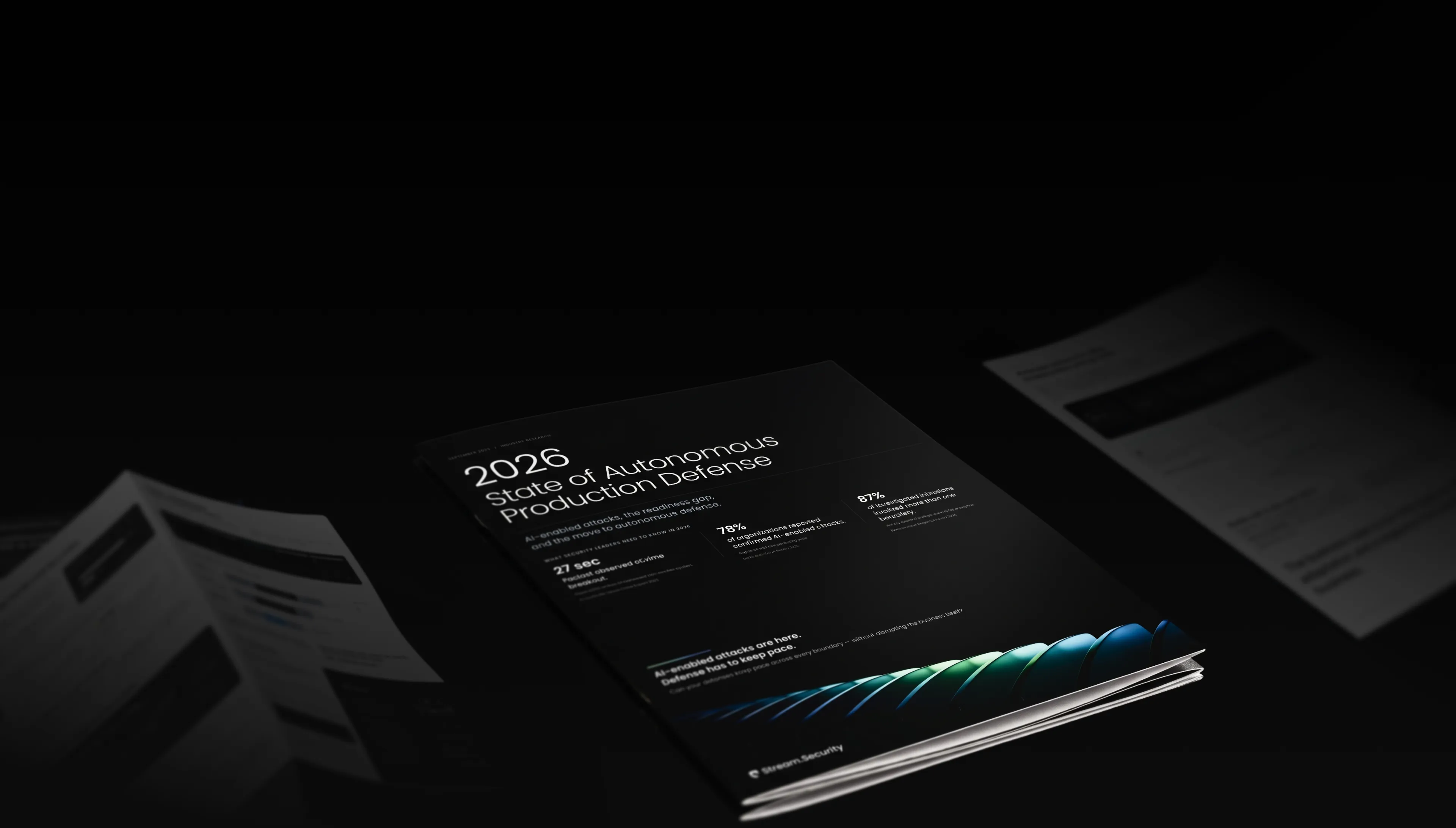
The 2026 State of Autonomous Production Defense draws the full picture, from threat reports and incident investigations to frontier-model evaluations and enterprise surveys, to show what has changed, where readiness falls short, and what defense needs to act at machine speed, safely.

Three numbers that security leaders need to know in 2026
27 seconds
The fastest observed eCrime breakout: from initial access to movement into another system.
78%
Organizations reported confirmed or suspected AI-enabled attacks in the past year.
87%
Of investigated intrusions involved activity across multiple attack surfaces
What changes when AI carries out the attack?
1. From assistance to execution to swarms
How agents plan, use tools, rebuild after detection and coordinate in parallel, from a six-hour multi-agent credential campaign to the ~700-agent Hugging Face intrusion.
2. Across every boundary
How agents plan, use tools, rebuild after detection and coordinate in parallel, from a six-hour multi-agent credential campaign to the ~700-agent Hugging Face intrusion.
3. The readiness gap
How agents plan, use tools, rebuild after detection and coordinate in parallel, from a six-hour multi-agent credential campaign to the ~700-agent Hugging Face intrusion.
4. A path for defenders
How agents plan, use tools, rebuild after detection and coordinate in parallel, from a six-hour multi-agent credential campaign to the ~700-agent Hugging Face intrusion.

How ready is your team for autonomous defense?
The report makes the case for defenses that can adapt as attacks change. Start with one workflow your team would consider automating. Can you follow the attack, understand the options and check the outcome?
risk score is 16
The capabilities exist, but people connect them. You have strong tools and some automation, but the handoffs are manual: data is joined during the incident, impact is agreed in a meeting, and containment is confirmed when a ticket closes. Your response time is set by the slowest handoff.
We've sent your cloud security risk assessment to your email.
Check your inbox in the next few minutes. If you don't see it, please check your Spam/Junk folder.

Answer five questions to see what is in place and what needs attention. A self-assessment based on your answers, with actionable recommendations.