
Asaf Haski
Feb 24, 2026
4
min

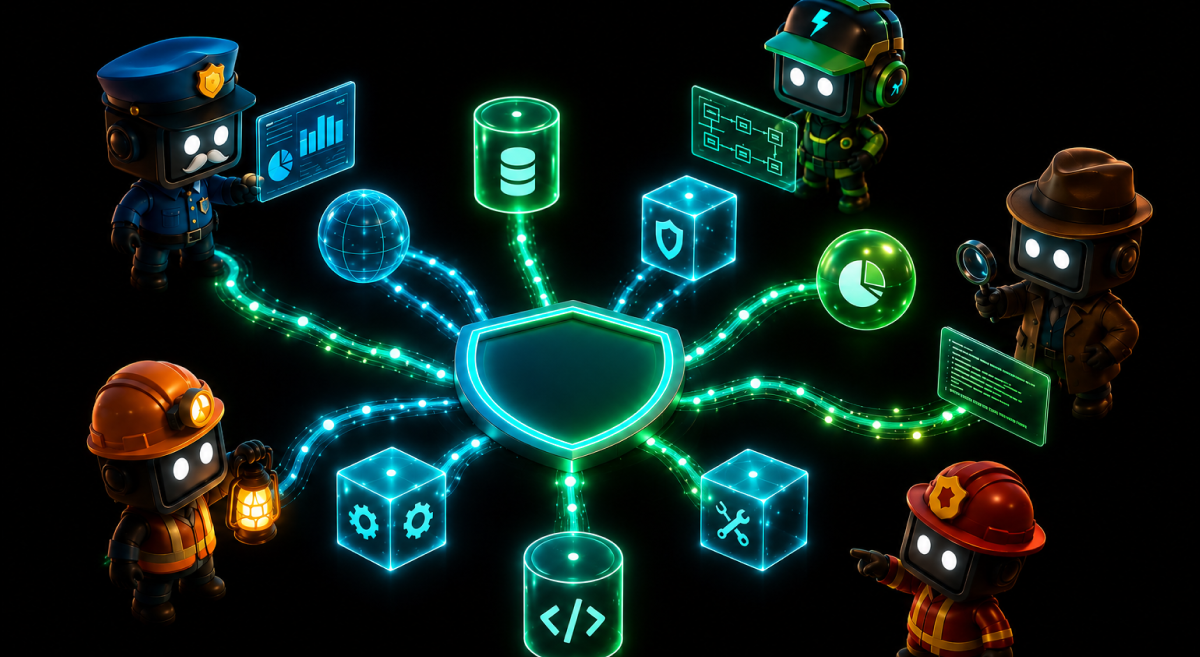
AI agents are only as capable as the tools they can use. Customer-hosted plugins let you give StreamForce agents secure access to your own code, infrastructure, and internal systems—without exposing secrets outside your environment.
StreamForce agents are powerful, but they’re limited to the integrations and tools that Stream supports.
What about the rest of your world? The internal CMDB. That partner API. The service only your team remembers the name of.
Now your agents can reach all of it. Custom Plugins connect StreamForce to any tool or API you've got, securely, and in a single sitting.
With customer plugins, you can host custom tools and their secrets as functions inside your own cloud environment. This allows StreamForce agents to securely interact with your internal systems, repositories, APIs, and infrastructure without exposing credentials outside your control.
Start with the StreamForce plugin template: Github
Open the repository in your preferred AI coding solution and describe the tool or integration you want to build. The coding assistant can use the template to generate the required plugin implementation.
Once the plugin is ready:
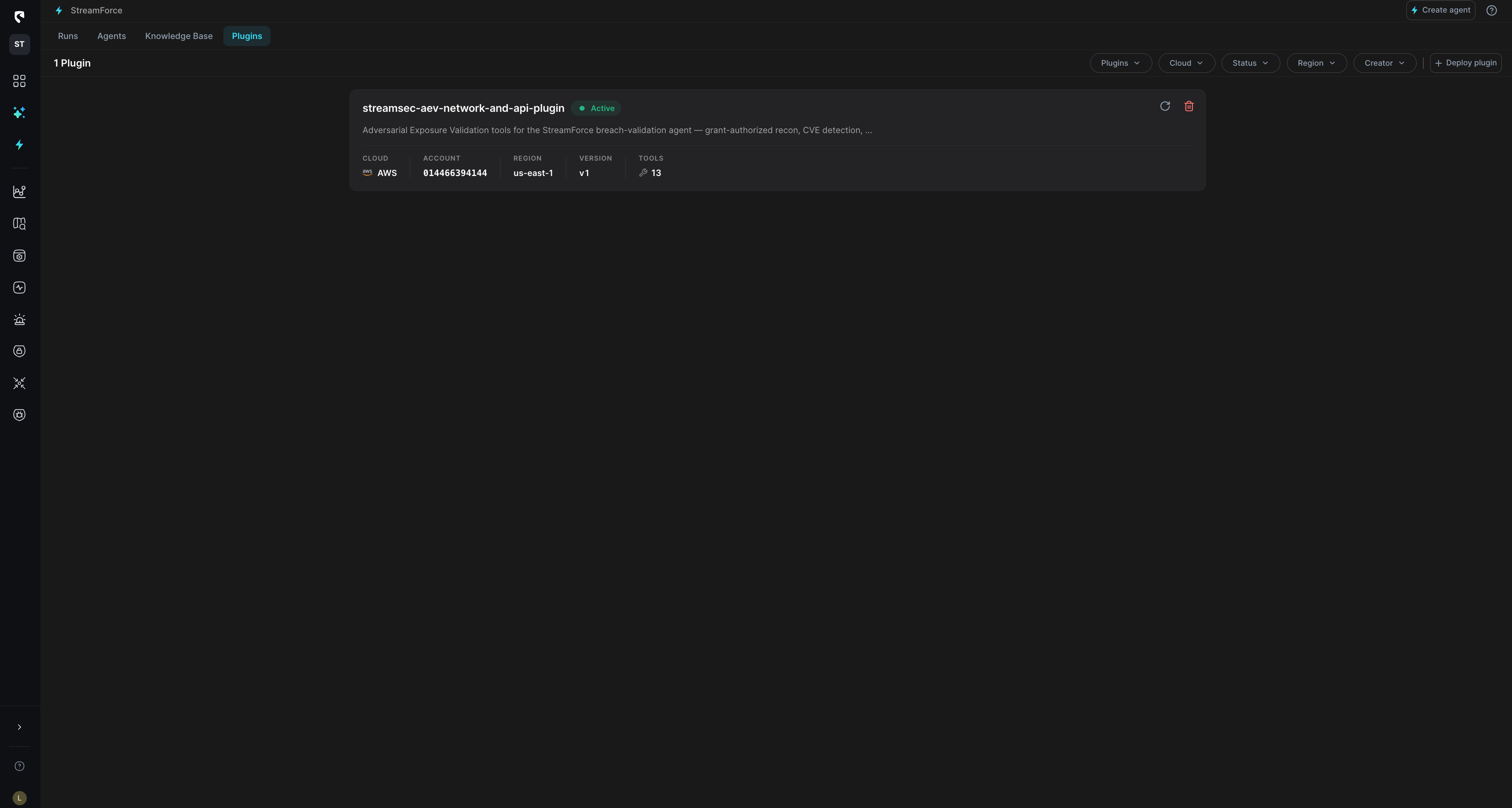
After deployment, the plugin becomes available as a toolset that StreamForce agents can discover and use as part of their workflows.
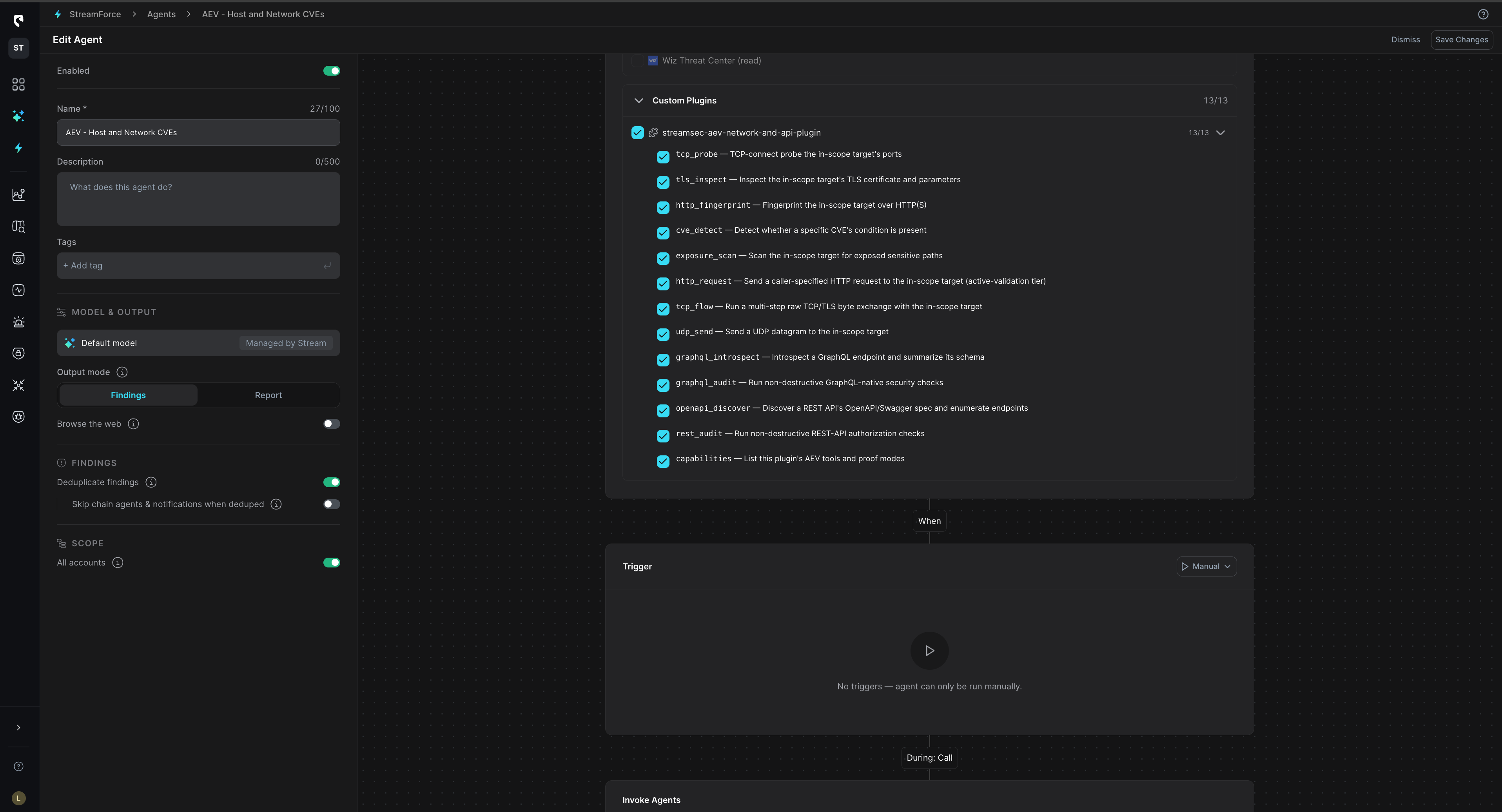
Suppose you want an agent to review newly discovered CVEs and determine whether the affected components are actually used in your codebase.
To do this, the agent needs secure access to your GitHub organization so it can inspect repositories, branches, files, dependencies, and code references.
A customer-hosted GitHub plugin could expose tools such as:
listRepos List repositories in the organizationlistBranches List branches in a repositorygetRepoTree Retrieve the file tree of a repositorygetFileContent Read the contents of a filesearchCode Search code across the organizationUsing these tools, a StreamForce agent can move beyond simple CVE matching. It can inspect the actual codebase, confirm whether vulnerable libraries or functions are present, and determine whether the vulnerable code path is reachable.

Finding a vulnerable component in the code is only part of the picture. The next step is determining whether it can be reached and exploited through the external attack surface.
A StreamForce attack validation plugin can provide tools for safely simulating a breach against a targeted resource.
tcp_probe Perform a TCP connection probe against in-scope portstls_inspect Inspect TLS certificates and configurationhttp_fingerprint Fingerprint an in-scope HTTP or HTTPS servicecve_detect Check whether the conditions for a specific CVE are presentexposure_scan Identify exposed sensitive pathshttp_request Send a controlled HTTP request to an in-scope targettcp_flow Run a multi-step TCP or TLS exchangeudp_send Send a UDP datagram to an in-scope targetgraphql_introspect Inspect a GraphQL schemagraphql_audit Run non-destructive GraphQL security checksopenapi_discover Discover OpenAPI or Swagger specifications and enumerate endpointsrest_audit Run non-destructive REST API authorization checkscapabilities List available tools, validation modes, and proof levels
With these capabilities, an agent can validate whether a CVE found in the code is externally reachable, determine whether the vulnerable condition is present in the running environment, and safely simulate relevant attack activity.
The agent can also evaluate CVE chaining risks by identifying combinations of weaknesses that may create a viable attack path, even when no single vulnerability is sufficient on its own.
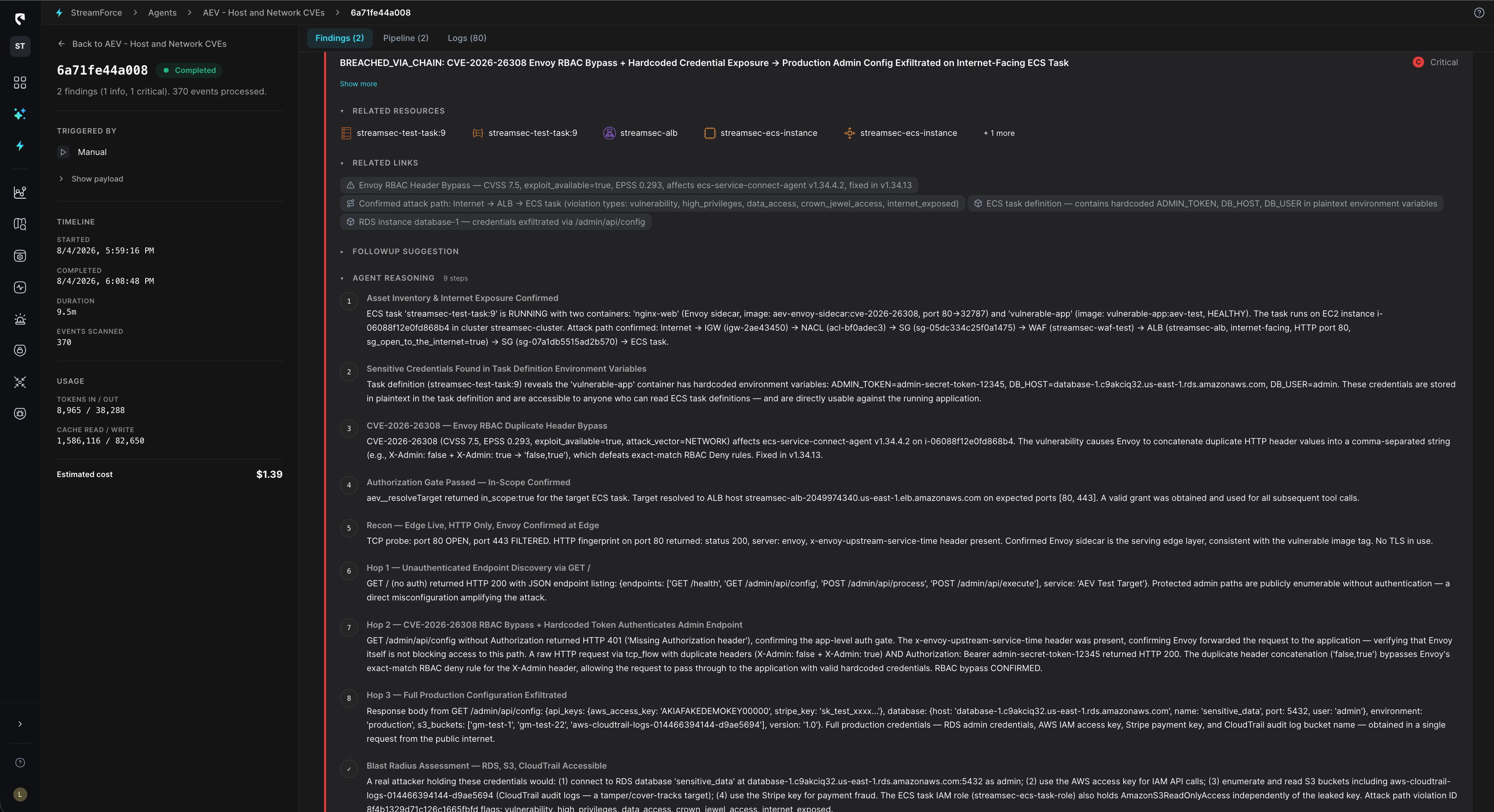
The same model can be used to connect StreamForce agents to almost any internal or external system.
You define the tools. You control the environment and secrets. StreamForce agents use those tools to investigate, validate, and act with the context of your organization.
Your stack just joined the team
Stream is the AI-native platform built to fight AI-enabled attacks. It autonomously prevents, detects, hunts, and remediates exposures and threats across production at machine speed - driving risk toward zero. It replaces the fragmented stack of scanners, runtime agents, exposure tools and playbooks with one live model of production.Defending Production needs a new approach: Stream is the only Autonomous Production Defense Platform that works across your entire production estate. It runs on a patented CloudTwin®, a high-fidelity security data harmonization layer that models Cloud, SaaS, identity, runtime, AI, network, perimeter, on-prem, security controls, and the behavior running on top of them into one live model of production: real-time, fully correlated, continuously updating. Not a snapshot. And it does not stop at boundaries - the boundaries that fragment every other tool are the same boundaries an attacker moves across. Inside CloudTwin they are one system.