.png)
Petr Zuzanov
May 4, 2026
min

If you don’t know your cloud, you can’t secure it. Alerts and AI don’t help much without real context. “Know Your Cloud” (KYC) is about understanding what you actually have, who and what can access it, and what could go wrong. Get that right, and detection makes sense, AI gets smarter, and response gets better.
In fintech, KYC (Know Your Customer) is how organizations verify identity, establish trust, and manage risk. It’s the foundation of every secure transaction. Without KYC, banks and payment providers are flying blind, exposed to money laundering, fraud, and regulatory risk.
The same principle applies to cloud security operations. Most SOCs only “see” when alerts trigger. But in the cloud, the baseline itself, which includes ephemeral resources, role chaining, serverless functions, and SaaS APIs, is a moving target. If you don’t know your cloud, every detection or AI triage is just guesswork.
“Know Your Cloud” is the process of establishing identity, context, and trust in your cloud footprint as the prerequisite for security operations.
Pass/Fail Mindset:
.png)
Know Your Assets
Know Your Identities
Know Your Configurations
Know Your Risks
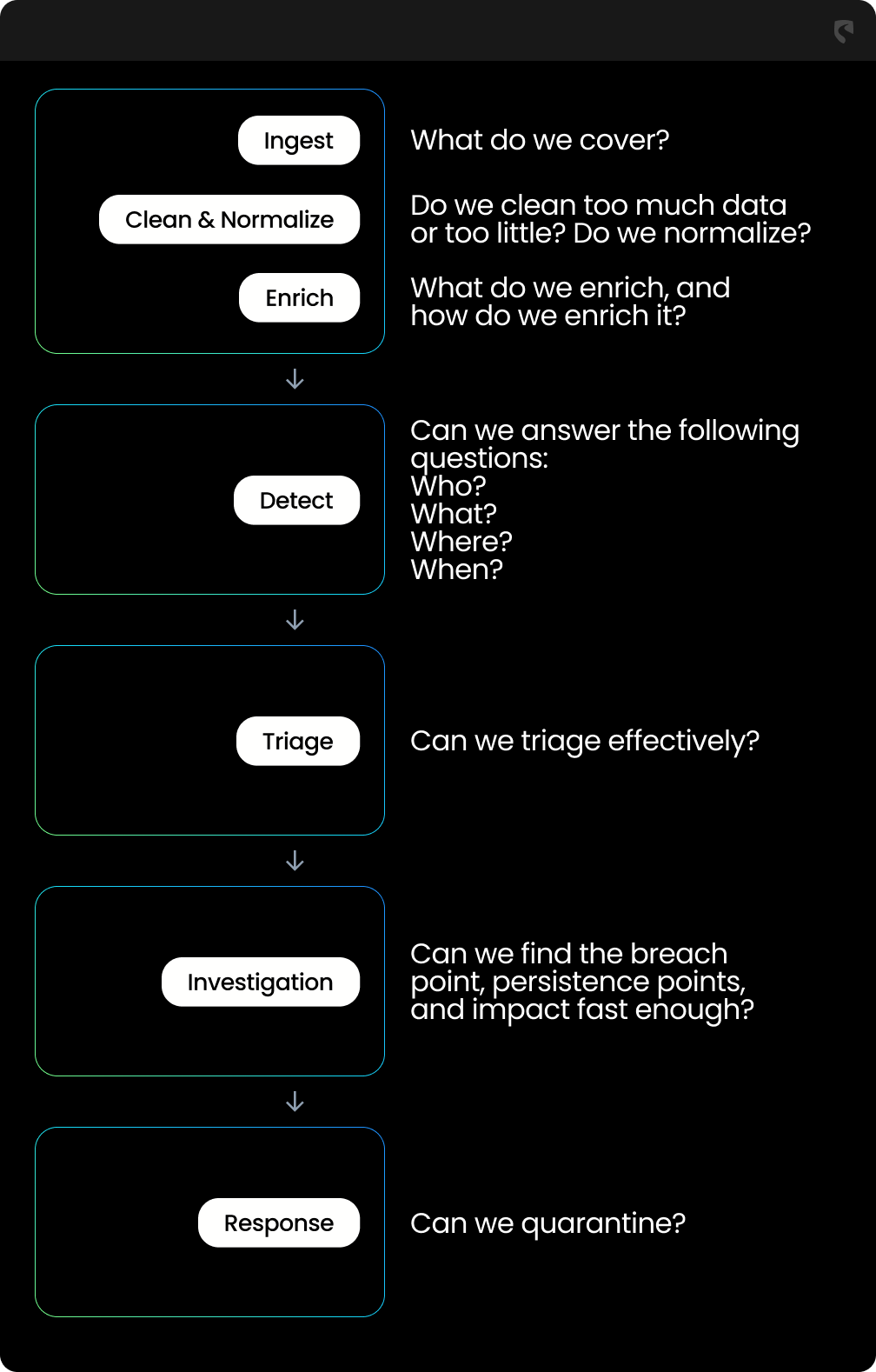
Know Your Telemetry
Know Your Detections
Know Your Responses
Without KYC for cloud SecOps:
Once you Know Your Cloud, you get:
Take the quiz to your team and see where you stand.
Stream is the AI-native platform built to fight AI-enabled attacks. It autonomously prevents, detects, hunts, and remediates exposures and threats across production at machine speed - driving risk toward zero. It replaces the fragmented stack of scanners, runtime agents, exposure tools and playbooks with one live model of production.Defending Production needs a new approach: Stream is the only Autonomous Production Defense Platform that works across your entire production estate. It runs on a patented CloudTwin®, a high-fidelity security data harmonization layer that models Cloud, SaaS, identity, runtime, AI, network, perimeter, on-prem, security controls, and the behavior running on top of them into one live model of production: real-time, fully correlated, continuously updating. Not a snapshot. And it does not stop at boundaries - the boundaries that fragment every other tool are the same boundaries an attacker moves across. Inside CloudTwin they are one system.