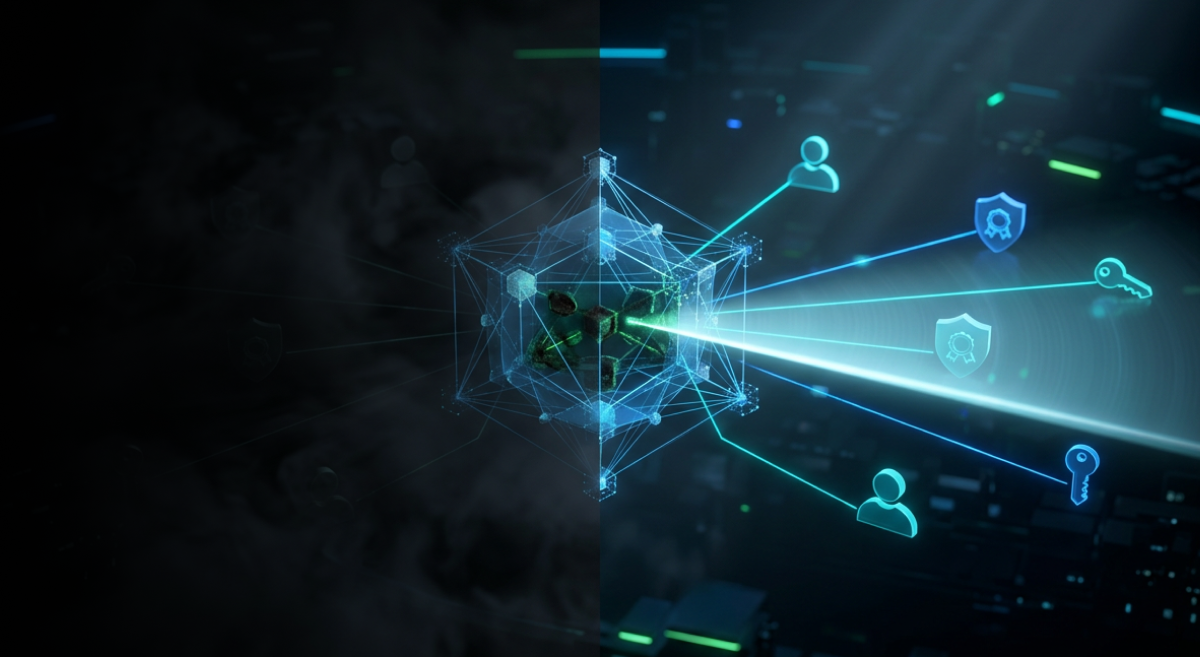
CrowdStrike’s latest announcement around “real-time Cloud Detection and Response” is an important signal. It confirms what the market already knows: cloud security can no longer tolerate multi-minute blind spots. Enabling detections inline, before logs are written to the database, is objectively and definitely progress. It means that detection is no longer dependent on storage or ingestion delays.
But here’s the uncomfortable truth:
It’s the right step in the wrong direction.
CrowdStrike’s CDR offering has only made detection faster. They have not made it more meaningful. And in the cloud, speed without context doesn’t create clarity. It creates false confidence at scale.
This is not a critique of CrowdStrike’s EDR business. Falcon redefined endpoint security, and it did so by deeply understanding the environment it was built for. Crowdstrike’s EDR offers a dynamic operating system running in relatively static on-prem environments, where network topology and identity paths don’t change every minute.
But in static environments, execution paths are predictable, and ownership boundaries are clear. The cloud is none of those things.
The Log-Centric Paradigm Breaks in the Cloud
CrowdStrike’s approach to CDR is still rooted in a familiar assumption: if you analyze raw signals fast enough and correlate them cleverly enough, understanding will emerge.
That assumption worked on endpoints, but it breaks in the cloud.
Cloud attacks are not sequences of isolated events. They are orchestrated changes to a living system that include IAM role updates, network reachability shifts, service-to-service trust expansions, and ephemeral resources that exist for minutes and disappear.
A raw control-plane event will tell you that something happened.
It will not tell you what that change enabled.
The inline detection that Crowdstrike’s CDR offers does not fix that. It just surfaces the ambiguity sooner.
Faster Detection, Faster False Positives
This is where the danger lies.
Stateful data is everything when it comes to cloud. It builds the foundation for the reality of your cloud at any point in time. Live, contextual state is what gives events meaning by resolving what actually changed in the environment, not just that something happened.
The CloudTwin (patent pending) is what makes AI reliable in the SOC. Without a continuously updated model of the cloud, AI is forced to reason over fragments: logs without relationships, events without impact, signals without blast radius. Having a CloudTwin gives AI grounded truth. It knows how identities, permissions, network paths, SaaS access, and configurations connect in real time. That stateful understanding is what allows AI to answer questions analysts actually care about, including what changed, what it exposed, what it can reach now, and what the safest response is. This is the difference between an AI that summarizes alerts and an AI that reasons about the environment like a senior analyst who already knows the cloud by heart.
In the cloud control plane, events without state are actively misleading. A permission change does not tell you whether that permission created a new attack path. A security group update does not tell you whether a critical asset is now internet-exposed. An API call does not tell you whether it expanded the blast radius or was operationally irrelevant.
We covered this exact failure mode in depth in our analysis of toxic combinations in the cloud. When detection systems reason over static posture or discrete events, they miss the attack path. They surface alerts divorced from exploitability. And when teams respond based on that data, they either overreact or hesitate.
This quickly creates a snowball effect in which auto-response becomes dangerous, manual response is slow, and trust in the system erodes.
When you accelerate that model with inline detection, you don’t get better security. You get bad decisions, faster.
It’s like trying to drive faster while steering the wheel in the wrong direction. You’re going faster, but you still have no idea where you’re going.
The Cloud Is Not On-Prem with Better APIs
The core issue is conceptual: CrowdStrike is still treating the cloud as an environment where events are the primary source of truth. That worldview assumes analysts can reconstruct reality by correlating endpoint telemetry with cloud audit trails.
But that is an on-prem mindset.
The cloud is a living organism. Its security posture is defined by dynamic relationships rather than isolated events: role assumptions, real-time reachability, lateral identity movement, and ephemeral assets. This posture is continuously changing, driven by both legitimate operations and adversarial activity.
In a dynamic in which events run the show, alert numbers soar. But security teams don’t want more alerts. They want answers.
What is the blast radius of this change?
What assets are now reachable that weren’t before?
Which role actually matters here?
What is the safest response that won’t break production?
No number of raw events, no matter how early they are detected, can answer those questions on their own.
Why Context Has to Come First
This is the fundamental shift cloud security requires.
Detection must be grounded in a continuously updated understanding of the environment itself, free of snapshots and after-the-fact correlation.
When security teams use a real-time model of cloud state that knows identities, permissions, network paths, configurations, and how they evolve together, events become meaningful.
Without that stateful context, events are noise generators. With it, they become evidence.
This is why log-centric CDR, even with inline detection, is structurally limited. It optimizes the execution layer while ignoring the reasoning layer. It moves detection earlier in the process without understanding what individual detections may represent.
What Real-Time Actually Means
Real-time security is not about how quickly you trigger an alert.
It’s about how quickly you can understand what has changed in your environment and why it matters.
At Stream, we support inline signal analysis without pulling delays. But we don’t stop there. Those signals are immediately converted into live cloud context. They update a real-time model of the environment in which attack paths are recalculated, blast radius is known, and impact is explicit. This is the difference.
Security operations teams don’t wake up asking for faster detections. They wake up wanting to know their cloud. What it looks like now. How it changed in the last five minutes. And where the real risk actually is.
Real-time detection is a prerequisite.
Real-time context is the outcome.
Anything less is just faster confusion.
About Stream Security
Stream is the AI-native platform built to fight AI-enabled attacks. It autonomously prevents, detects, hunts, and remediates exposures and threats across production at machine speed - driving risk toward zero. It replaces the fragmented stack of scanners, runtime agents, exposure tools and playbooks with one live model of production.Defending Production needs a new approach: Stream is the only Autonomous Production Defense Platform that works across your entire production estate. It runs on a patented CloudTwin®, a high-fidelity security data harmonization layer that models Cloud, SaaS, identity, runtime, AI, network, perimeter, on-prem, security controls, and the behavior running on top of them into one live model of production: real-time, fully correlated, continuously updating. Not a snapshot. And it does not stop at boundaries - the boundaries that fragment every other tool are the same boundaries an attacker moves across. Inside CloudTwin they are one system.

.png)

.png)